Unbreakable Aesthetic Monolithic Zirconium!
Do you know the difference between Monolithic Zirconium, which revolutionized dental veneers, and traditional porcelain veneers? One stands out with its "unbreakable" strength, while the other represents classic aesthetics. In this article, we examine why Monolithic Zirconium, produced from a single block, is the best option, especially for those with teeth grinding problems, its advantages over porcelain veneers, and the fast treatment processes offered in Cyprus by AuraDent with its digital technology. Don't leave your smile to chance, discover the most durable solution.

In the world of dental aesthetics and restoration, materials are constantly evolving. Patients often experience confusion with the terms they frequently encounter when visiting our clinic. While "zirconium" is a general term, there are significant differences between monolithic zirconium , which has become particularly popular in recent years, and traditional porcelain veneers (or layered porcelains). At AuraDent, our technology-focused clinic in Nicosia, we offer long-lasting solutions tailored to our patients' needs. In this article, we will compare monolithic zirconium, renowned for its unbreakable properties, with aesthetic porcelain veneers to help you make the right choice.
What is Monolithic Zirconium?
Monolithic zirconium, as the name suggests ("mono" means single), is a type of dental crown produced by milling a single block of zirconium using computer-aided design (CAD/CAM). Unlike traditional methods, there is no need to apply porcelain to the zirconium substructure. The entire crown is 100% zirconium.
The most important feature that makes this structure special is its exceptional durability . Because it is not a layered structure, it does not carry the risks of porcelain chipping or cracking. They are generally described as "unbreakable" or "chip-resistant" .
Key Features:
- High Strength: Exhibits maximum resistance to chewing forces (up to 1000-1200 MPa).
- Minimal Cutting: Because it can be processed very precisely, it requires removing less material from your own tooth.
- Biocompatibility: Provides excellent compatibility with the gums, with no risk of allergic reactions.
What are porcelain veneers?
Commonly known as "Porcelain Teeth," this group of teeth is typically created by applying aesthetic porcelain powders layer by layer onto a substructure (metal or classic zirconium) using a brush. The aim is to mimic the transparency and color transitions of natural teeth with porcelain layers.
However, since this method combines two different materials (substrate and top porcelain), there is always a risk that the top porcelain layer may detach (break) in situations such as biting hard objects.
Differences Between Monolithic Zirconium and Porcelain Veneers
The key factors that differentiate the two materials can be summarized as follows:
1. Durability and Structure (The Most Fundamental Difference):
Monolithic zirconium is much stronger because it is a single piece. In porcelain veneers, even if the substructure is strong, the top porcelain layer (veneer) can crack. In monolithic zirconium, a problem called "porcelain detachment" is technically impossible.
2. Aesthetic Appearance:
Traditional porcelain veneers are very successful in terms of depth perception and transparency thanks to their layered structure. Previously, monolithic zirconium crowns were considered more matte (opaque). However, the new generation of gradient monolithic blocks we use at AuraDent have largely closed this aesthetic gap and provide results very close to natural teeth.
3. Amount of Tooth Cutting:
Monolithic zirconium can be produced much thinner (0.5 mm). However, with porcelain veneers, slightly more grinding of your tooth is required because space needs to be created for both the substructure and the porcelain crown.
Why do doctors prefer monolithic implants?
There are scientific and practical reasons behind our physicians recommending monolithic zirconium:
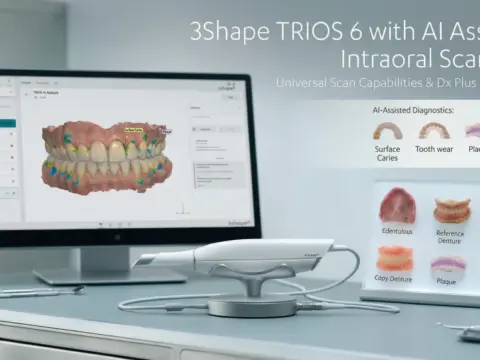
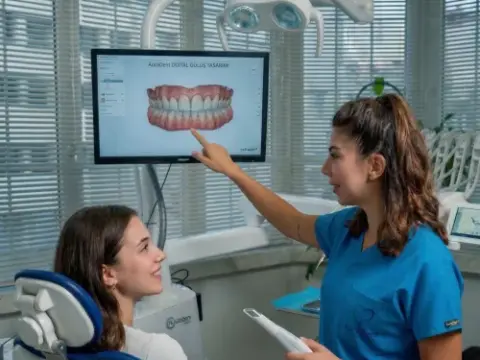
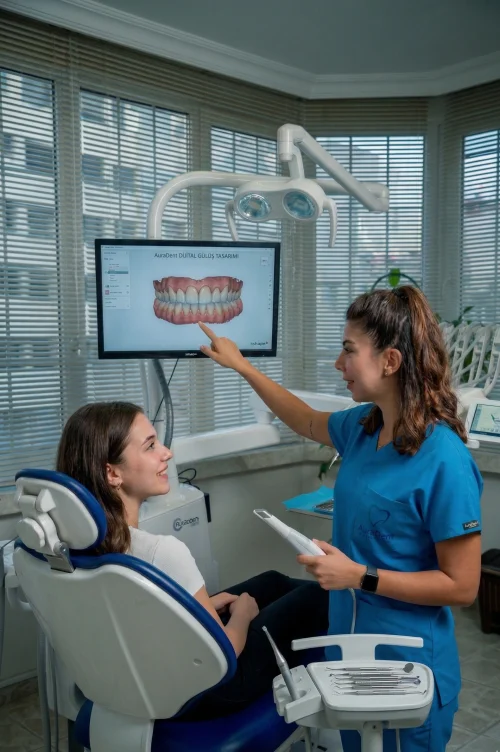
- Digital Precision: Produced with digital scanners that eliminate human error. Achieves a perfect fit in one go.
- Tissue-Friendly: Thanks to its smooth surface, it does not retain plaque and does not irritate the gums.
- Risk-Free Outcome: Since there is no risk of porcelain breakage, long-term patient complaints and the need for repairs are minimal. It is especially a lifesaver for patients who grind their teeth (bruxism).
Premium Service in Cyprus: The AuraDent Difference
In Northern Cyprus, particularly in the Nicosia region, Monolithic Zirconium crown application is only offered by premium clinics that have invested in high technology. At AuraDent, we take this service to the next level with our in-house laboratory facilities and digital workflow.
Advantages we offer our patients:
- Fast Delivery: With digital measurement and manufacturing (CAD/CAM), we reduce waiting times from days to hours.
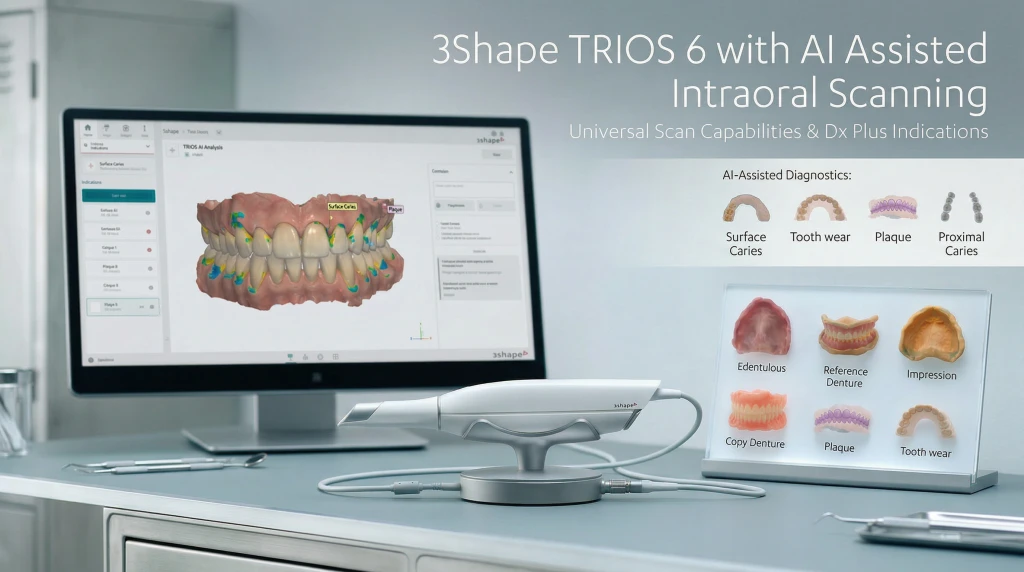
- Ergonomics and Comfort: Instead of the nauseating traditional dough-based measuring tools, we take measurements in seconds using an intraoral camera.
- Guarantee: The fact that the blocks we use are certified and traceable increases the reliability of your treatment.
To achieve the smile of your dreams with the strongest foundation, we invite you to AuraDent. Come, let's decide together which material is best for you.
Frequently Asked Questions